

Scuba Diving 101
Your gateway to underwater exploration

TL;DR: I’m diving into a three-part series on scuba travel! Part one covers why I prefer getting certified abroad, a breakdown of the Open Water certification process, and my "buy vs. rent" gear recommendations. Plus, I’ve included a 1–10 rating of my 50+ dives across Mexico, Indonesia, Hawaii, and beyond to help you pick your next underwater adventure.
Why I love to dive
There’s something magical about being in such an alien environment unlike anything you’ve experienced — I love looking up and seeing the rippling effect of water at the surface
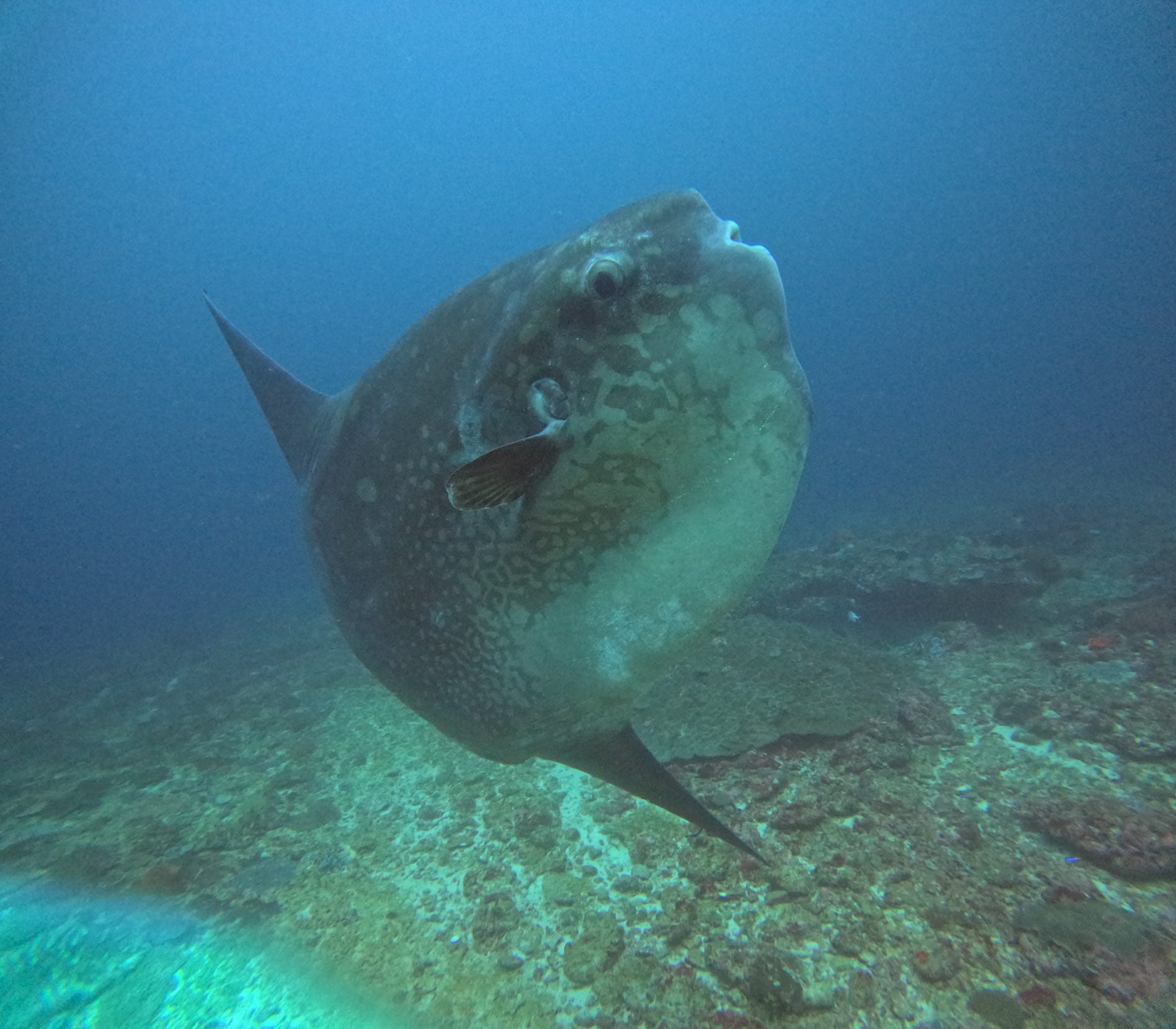
I’m obsessed with underwater creatures. Encountering an ocean sunfish was probably one of the happiest moments of my life. Many of the things I’ve seen underwater are not something you can find while snorkeling. More generally, this is one of the best ways to observe wildlife up close (and they are often not afraid of you!)
When you dive, typically it’s two dives in the morning where you wrap up by 12/1PM. That makes diving trips the best combination of adventure in the morning and relaxation (by the beach!) in the afternoon
How does the certification process work?
Getting certified to dive is a lot like getting your driver’s license:
First, you review course materials. These readings will give you an overview of the science/physics of diving and diving skills, not that different from reading a driver’s manual on driving skills.
Second, you take a test which will quiz you on your understanding of the course materials. You’ll have to ‘pass’ to move onto the next level. (Like getting your permit!)
Third, you practice in a pool / confined water area with an instructor. There’s a checklist of skills the instructor needs to teach you and make sure you can properly do underwater. To continue to analogy, this would be practicing all the necessary driving skills in a parking lot.
Fourth, you practice the same skills from the pool in ‘open water’ (‘real-world’) spread out across four dives with the instructor. If your instructor is satisfied with your performance, you pass and become certified!
Where should I get certified?
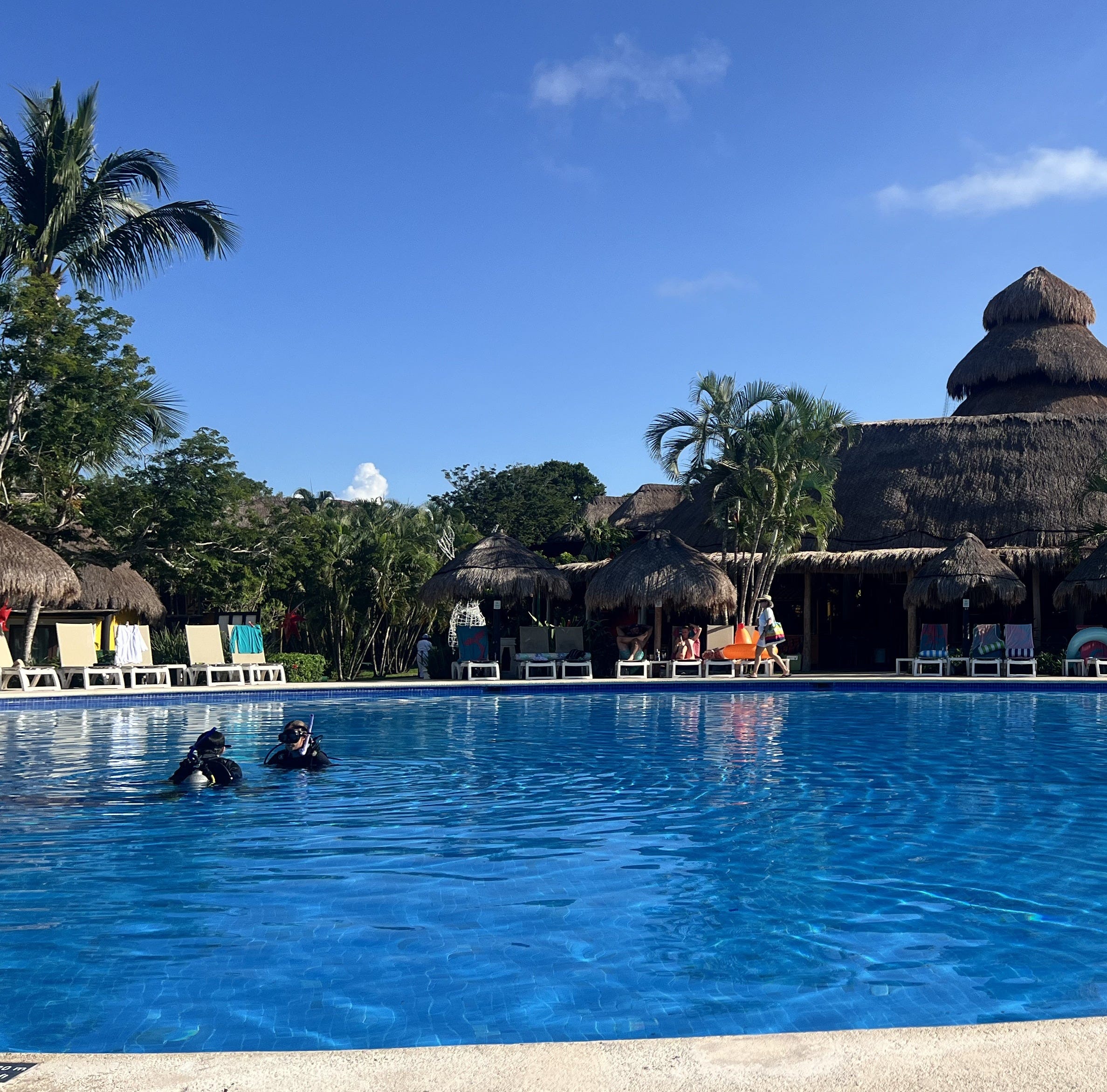
My hot take: you should travel to get certified. While we live in New York, I encouraged my fiancé George to come to Cozumel, Mexico with me to get his certification instead of using a dive shop in NY (there are unexpectedly several in the concrete jungle).
My reasoning:
If you ignore the cost of the flight and accommodation (lol), the cost of getting certified abroad is cheaper. George’s course cost $674 all-in, whereas the NY shops’ ranged from $850-$1100 (often, not including the cost of travel to get to an open water area).
It’s more efficient and fun on a beach.
Efficiency: In NY, you’ll do your pool exercise somewhere in the city, but for the open water dives you’ll have to travel outside the state. It might be a long process from beginning to end for certification if it takes a while for you to get this trip scheduled. In contrast, getting certified on a trip takes as little as four days from beginning to end — one day in the pool, two days of open diving with two dives each, and one day of rest before flying out. You may not even need this rest day if you can wrap up your dives 24 hours before your flight home.
Fun: The most common site on the East Coast is a quarry in PA — cold, no fish to be seen. If you don’t want to be in the quarry, the dive shop will give you a ‘waiver’ so you can do your open dives at any dive shop while traveling. But at that point, you might as well get certified with a dive shop on a trip. It’s a much better experience to learn to dive in warm water while seeing schools of fish and coral.
Unless you live in a good diving area, realistically, you’re always going to have to travel to go diving. If you don’t think you want to spend the PTO learning to dive, then it’s probably not worth spending the money to get certified.
Should I rent or buy equipment after certification?
I’ve been extra enough to map out my future dive trips, estimate costs of rental vs buying, and do a break-even analysis. My conclusion is buying most of the equipment is probably not worth it from a financial standpoint unless you live in a diving hotspot and/or become a diver full time. However, there’s no ‘rules’ to buying and you should always buy if you feel more comfortable using equipment you own.
I would just consider the facts that 1) getting all the gear will likely cost you a dedicated suitcase to store everything for travel, 2) some of the gear (e.g. regulator) requires periodic servicing at a shop that will be a continued cost, and 3) many dive shops charge rental as ‘full package’ or pricey a la carte so you’ll have to get most equipment to actually make not renting worth it.
That being said, there are some things to buy that I highly recommend:
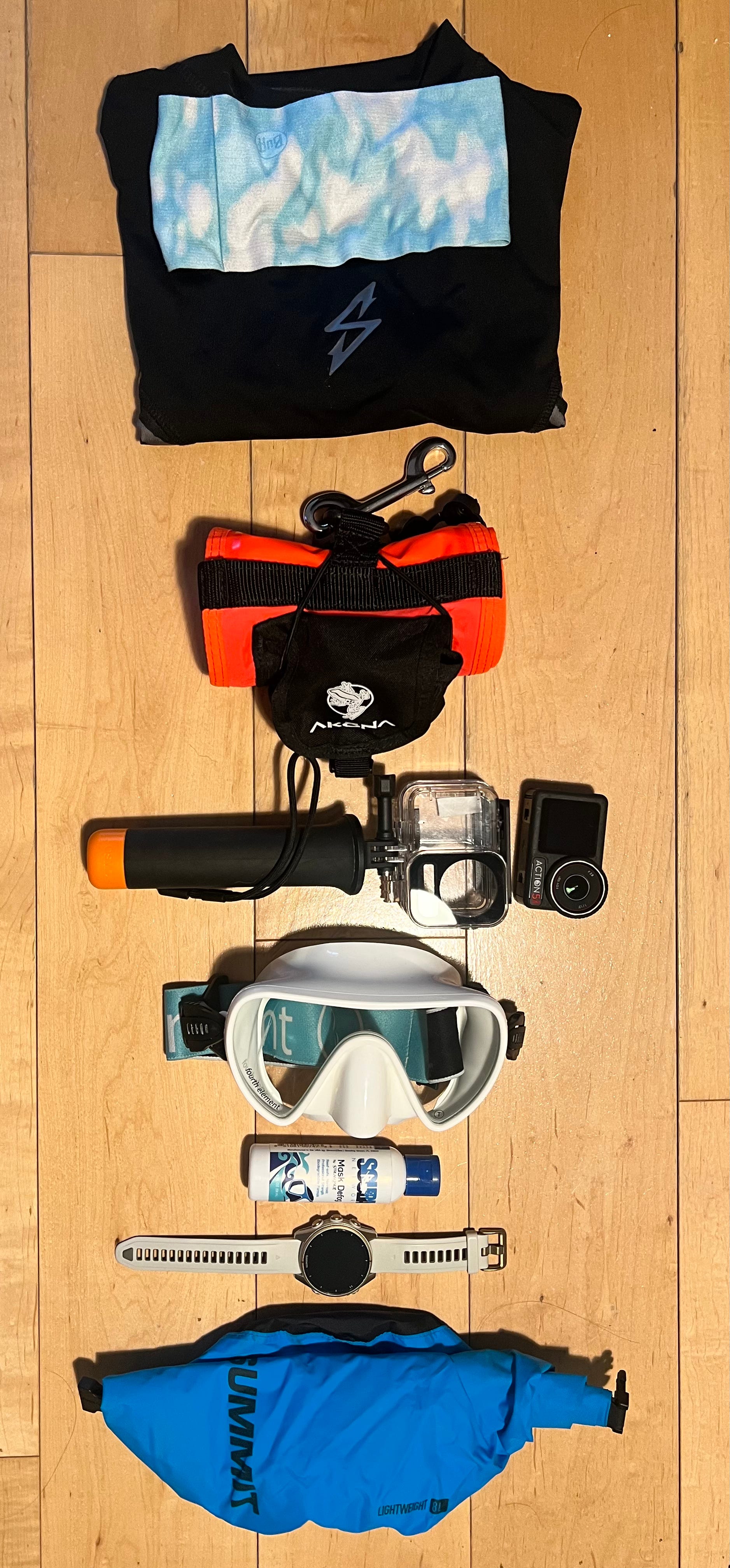
Dive insurance: It’s always good for peace of mind! The most popular is DAN which will give you pretty comprehensive coverage for $80 a year
Dive computer: Most dive shops’ rental does not include a dive computer. Dive computers help you understand your depth, how long you’ve been diving, and what your limit should be. Having a dive computer while diving is honestly one of the best investments to keep you safe while diving!
Mask & snorkel: Mostly because this is one of the easiest things to pack and it’s nice to have a reliable mask that fits your face. Also means you won’t have to rent for snorkeling!
Dive boots / socks: Not something dive shops usually rent out, these will provide your feet protection from rocks if you do shore diving and can act as a shield against the strain of wearing flippers. I’ve developed blisters after rubbing the bony parts of my feet against the flippers from multiple dives.
Other accessories:
Dry bag: I keep towel, phone, and other accessories in my dry bag when we’re on the boat
Defog: Although you’ll be able to keep fog out of your mask with either dish soap (usually provided by the dive shop) or spit, I find using defog on the mask beforehand is the most reliable way to keep it crystal clear while diving!
Buffs / rash guards: It’s mostly psychological but I feel like rash guards keep me warmer. Also it’s nice to not have to worry about staying out of the sun during your surface interval wait (many marine areas ban sunscreen to protect reefs). I also like wearing a buff on my head because it helps keep hair out of my face, ensuring no leaks in my mask!
DSMB: Not required until you start doing more ‘advanced’ dives, which mostly means dealing with currents. This is another safety piece for peace of mind, because if you ever get separated from the group you’ll be able to help the boat figure out where you are. I asked a dive shop to help teach me how to use it, and they were willing to do it because safety is always no. 1!
Underwater camera: I don’t recommend carrying one when you’re still learning, but I love capturing memories while diving! I currently own the DJI Osmo Action 5 Pro — It’s relatively new for me still but so far I feel like the hardware and software is both better than my last camera (GoPro Hero 7)
My diving experience thus far
My certifications:
I got my Open Water (the first level) certification in the Riviera Maya, Cancun Mexico in May 2022 with Dressel Divers
I got my Advanced Open Water (the second level) certification in Tulamben, Indonesia in September 2024 with Dive Concepts
I got my Nitrox certification (needed to dive with enriched oxygen tanks) in June 2025 in Bayahibe, Dominican Republic with Coral Point Diving
I just got my Rescue certification (the third level) in April 2026 in Roatán, Honduras with Splash Inn (more to come on this in parts 2 and 3 of this series!)
Where I’ve dived so far, chronologically:
Riviera Maya, Mexico; May 2022: 6/10
We stayed at an all-inclusive resort south of Cancun with an on-site dive shop. IMO, the best type of place to get certified!
Best encounter: Everything!! Diving for the first time can be pretty overwhelming trying to see everything. Really enjoyed the sea turtles :)
Please enjoy my amateur underwater videography
Costa Rica (Western coast); March 2023: 4/10
Unfortunately, I didn’t enjoy this because it was my first time diving since getting certified almost a year prior, which meant I was still very unconfident and nervous. Plus, visibility was pretty bad when we visited in March and was one of the colder places I’ve dived
Best encounter: We apparently had a pregnant bull shark but I did not see it lol. I did pick up a shark tooth at the bottom though I’ve kept as a souvenir! I would say the best encounter was meeting our dive guide — probably the funniest and kindest guide I’ve had so far
Bonaire; April 2023: 10/10
I got to dive with Dyver, an app that helps you log your dives! The founder, Merty, is a dive master and dove with us for a week in Bonaire. I love diving in warm water and had a great time here; it’s also the healthiest corals I’ve seen in the Caribbean.
Best encounter: Giant green moray eel swimming under me
My first encounter with a big eel out in the open!
Poor Knights Island, New Zealand; October 2023: 1/10
This was probably my most traumatizing experience diving — I was NOT used to the crazy cold water, and struggled with buoyancy due to my first time in a 7mm wetsuit and hood. I also broke my mask while trying to adjust my buoyancy which meant I had a leaky mask the whole time, and in general I felt like the guides were not watching over me which made me anxious underwater. I signed up for two dives and actually skipped out on the second one to snorkel with my friend.
Best encounter: Large jellyfish (while snorkeling lol)
Maui, Hawaii; July 2024: 6/10
We dove in Molokini and some other spots around the island. I’m generally less interested in underwater topography which made the dives that focused on volcanic formations (and with few fish) less fun for me. Hawaii is also the most expensive place I’ve dived (can be more than $120 a dive in Hawaii! Most of the other places I’ve dived at was more like $50-$70 a dive)
Best encounter: Reef manta ray
We were quite lucky to find a reef manta ray!
Tulamben, Indonesia; September 2024: 9/10
Tulamben is a tiny town on the northern side of Bali! We dove around a pretty cool shipwreck and I did my advanced training here.
Best encounter: Sleeping sea turtle in a night dive
Nusa Lembongan, Indonesia; September 2024: 10/10
Warming up in Tulamben meant I was feeling pretty comfortable in Nusa Lembongan. This was my first time diving crazy currents and encountered the healthiest reefs I’ve ever seen!
Best encounter: We actually chose to go to Bali specifically to try and see an ocean sunfish. They’re most famously found in a dive spot called Crystal Bay, and tend to hang out in thermoclines (water switches between cold and warmth). We only had two days to visit Crystal Bay — the first day we were unable to spot any, and spent the entire hour swimming around nothingness while trying to stay warm in the cold spots. The second day we also didn’t see one, and my guide had known instantly we weren’t going to because the water was too warm (didn’t feel any thermoclines). I had basically given up by then but our guide specifically took us to find an ocean sunfish in the second dive spot which is Manta Point! Normally when you dive Manta Point you go to an area where a bunch of manta rays hang out to get cleaned, but instead we went the opposite direction and almost immediately found the ocean sunfish. This was an incredibly lucky dive — we spent the entire time with one, which is pretty rare for one to not quickly leave! Runner up being the manta rays because I love them too (at some point one swam past the sunfish!)
Footage of my greatest achievement. I dreamt of this moment since seeing one at the Monterey Bay Aquarium
Bayahibe, Dominican Republic; August 2025: 6/10
Water temps were great, but besides seeing squid up close for the first time there wasn’t anything super memorable
Best encounter: Squid; they will float out in the ‘open’ but are camouflaged which is cool to see
Cozumel, Mexico; December 2025: 8/10
Diving here is better overall than Cancun itself, as the reefs are a little healthier and with more sea-life. We stayed at an all-inclusive dive resort for a week here.
Best encounter: Flying fish walking across the ocean floor!
Was mind-blowing watching a fish with legs
To date, I’ve done 58 dives and am hoping to hit 100 this year!
Final considerations
What if I’m not a strong swimmer? I should caveat that if the thought of being underwater stresses you out, do not put yourself in a dangerous position! While you’ll almost always dive with a guide that can help you out, ultimately the point of getting certified is to be aware of your surroundings and take care of yourself. That being said, I commonly joke that I “don’t know how to swim” (can only do breaststroke). Ironically I think being a really good swimmer can actually hinder your scuba skills, because the whole point of diving is to not move and to be as calm as possible.
Who should I get certified with?
By Program: There are several ‘schools’ of diving, with PADI being the largest. Most dive shops teach to certify with one or two of the schools. Personally I don’t think there’s a difference in which ‘school’ you choose, and you can also mix and match your diving certifications (my three certifications are spread across SDI, SSI, and PADI!)
By Dive Shop: I would check online to ensure the dive shop has a high safety record and is known for sustainability!
Next time I’ll chat more about how scuba diving actually works as well as its course offerings. Send a message if you want thoughts on where to travel to for your certification!